5 Axis CNC Machining Centers
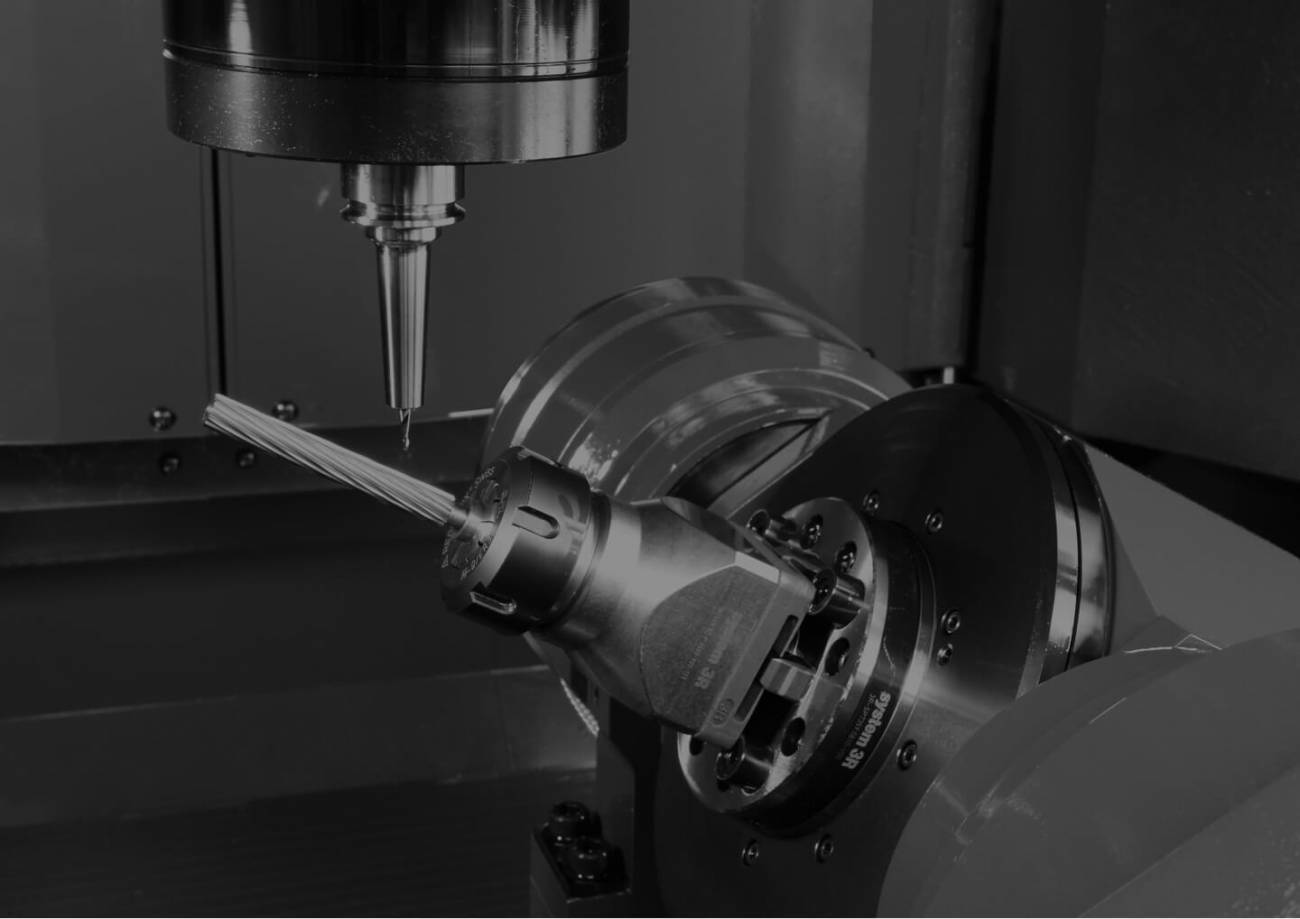
5 Axis CNC machine centers minimize setups and material handling while expanding what’s possible in machining complex parts with advanced multi-axis capabilities.
5 Axis Machines


Engineering Services
Your Road to Profit Paved with Precision
Time Tested, Industry Trusted
Our machine tools are only part of what makes Methods an ideal manufacturing partner. Our engineers design and implement strategic, complex integrations and applications involving various.
5 Axis CNC Machining Centers
5 Axis CNC machines allow the cutting tool or the workpiece to move along five axes at once, making it possible to machine complex, multi-sided parts in a single setup. This reduces manual repositioning, shortens cycle times, and delivers higher accuracy on demanding components across aerospace, medical, automotive, energy, and mold applications.
To explore additional machining solutions, visit our full lineup of CNC Machines.
What Is 5 Axis CNC Machining?
5 Axis machining adds two rotary axes (A/C or B/C) to the standard X, Y, and Z movements. This allows the tool to approach the part from virtually any angle, enabling:
- Machining five sides of a part in one setup
- Better access to deep features and complex geometry
- Tighter tolerances due to reduced handling
- Improved tool engagement and surface finish
Benefits of 5 Axis CNC
Advancing from traditional 3-axis machining to 5 Axis unlocks a higher level of precision, flexibility, and efficiency. By allowing the tool to reach the part from multiple angles in a single setup, 5 Axis technology streamlines production, improves consistency, and expands the types of parts a shop can take on. The advantages include:
- Fewer Setups: Machine multiple faces at once, reducing fixturing time and cumulative error.
- Shorter Cycle Times: Complete more operations in fewer steps.
- Higher Precision: Maintain optimal tool orientation and reduce stack-up error.
- Superior Surface Finish: Better engagement angles lead to smoother surfaces and less finishing work.
- Longer Tool Life: Controlled tool angles reduce cutting force and wear.
- Greater Capability: Produce parts impossible or inefficient with 3-axis machines.
If you need guidance selecting the right tooling or process, our Application Engineering team can assist.
5 Axis CNC Industries & Applications
Methods supports manufacturers across a wide range of industries with 5 Axis machining solutions tailored to demanding part requirements. Our engineering team works directly with customers to match the right machine, tooling approach, and automation strategy to each application. These systems are used daily to produce advanced components in:
- Aerospace – turbine blades, impellers, structural components
- Medical – implants, orthopedic devices, surgical instruments
- Automotive / EV – cylinder heads, housings, precision prototypes
- Die & Mold – deep cavities, complex contours, enhanced finishing
- Energy – pump and valve bodies, blades, pressure-bearing parts
- High-Mix Job Shops – multi-face, small-batch, complex geometry parts
5 Axis CNC Machines From Methods Machine Tools
Methods delivers a complete portfolio of 5 Axis machining centers built for precision manufacturing, high-mix production, mold and die work, and automated machining environments. Every machine we supply is backed by our in-house Application Engineering team, nationwide service network, and turnkey automation capabilities through Automation Engineering.
High-Precision Vertical 5 Axis Machining Centers
Our vertical 5 Axis platforms combine rigidity, accuracy, and smooth contouring performance for tight-tolerance aerospace, medical, and mold applications. Explore available models in Vertical Machining Centers.
Small-Footprint & High-Mix 5 Axis Solutions
Methods offers compact 5 Axis machines designed for shops running small-to-medium parts, short runs, and varied part families — all while maintaining excellent repeatability. View these systems under 5 Axis Machines.
High-Speed Mold & Die 5 Axis Platforms
For deep cavities, organic forms, and fine surface finishes, we provide 5 Axis machines optimized for mold and toolmaking. Learn more about these applications in Die & Mold.
Horizontal 5 Axis Machining Centers
Our horizontal 5 Axis platforms offer larger work envelopes, superior chip management, and palletized throughput for production environments. See supported platforms under Horizontal Machining Centers.
Automation-Ready & Palletized 5 Axis Systems
Methods integrates robotics, pallet pools, probing, and turnkey cells to support lights-out machining and continuous production. Automation solutions are available through Automation Engineering, and palletized machine options can be found under Multi-Pallet Systems.